Why Hiring Delays Happen
Most hiring delays do not happen during recruitment. They happen much earlier, at the stage where a hiring need is still waiting for approval.
A manager identifies a role, but the request gets stuck between department heads, finance approvals, and HR validations. Emails are exchanged, messages are missed, and decisions depend on who responds first rather than on a structured process. By the time the job is finally approved, weeks may have passed, and the best candidates are already gone.
This is where a structured job requisition workflow becomes critical. It ensures that hiring requests move through a defined approval process with clarity, accountability, and speed, without losing financial control or governance.
Modern systems like Numla ATS help organisations replace fragmented approval chains with structured, trackable workflows that reduce delays and improve hiring efficiency.
Why Job Requisition Workflows Matter
A job requisition workflow is the structured process through which a hiring need is reviewed, approved, and converted into an active job opening.
Without this structure, organisations face delays, inconsistent approvals, and a lack of visibility across hiring decisions.
Faster hiring decisions
One of the biggest contributors to slow hiring is the time between identifying a need and getting approval to hire. In many organisations, this stage alone can take several weeks, delaying the entire recruitment process.
Better financial control
Hiring decisions are financial commitments. A structured approval workflow ensures that every new role is aligned with budgets and approved headcount plans before it reaches recruitment.
Consistency in hiring decisions
Without a defined workflow, approvals often depend on informal communication channels. This leads to inconsistent decision-making where some roles move quickly while others are delayed without reason.
Audit and compliance readiness
A documented approval trail ensures organisations can track who approved a role, when it was approved, and under what conditions. This is essential for internal audits and regulatory compliance.
Problems in Manual Hiring Approvals
Many organisations still rely on email-based or informal approval systems. These create predictable inefficiencies.
No single source of truth
Hiring requests are scattered across emails, chats, and spreadsheets. This creates confusion about the latest status or approved version.
Lack of accountability for response time
Approvals depend on individual availability. There are no defined timelines, which means delays are common and unpredictable.
Missing structured information
Hiring managers often send incomplete requests, requiring HR or recruiters to repeatedly follow up on basic details like salary range, reporting structure, or justification.
No visibility into progress
Stakeholders cannot see where a request is stuck, leading to unnecessary follow-ups and coordination overhead.
Designing an Effective Job Requisition Workflow
A strong job requisition workflow balances speed, governance, and clarity. Below is a practical structure used by modern HR teams.
Stage 1: Hiring request submission
The process begins when a hiring manager identifies a need and submits a formal request.
Key inputs typically include:
- Job title and role level
- Department and reporting structure
- Business justification
- Employment type
- Proposed salary range
- Target start date
A structured submission ensures that all required information is captured before the approval process begins.
Stage 2: Department-level review
The request is first reviewed by the department head or functional manager.
Their role is to:
- Validate business need
- Confirm alignment with team structure
- Ensure role necessity within current priorities
This step typically operates within a short approval timeframe to avoid bottlenecks.
Stage 3: Finance approval
Finance teams review the request to confirm:
- Budget availability
- Salary alignment with compensation bands
- Headcount impact
This step ensures that hiring decisions remain financially controlled and aligned with planning cycles.
Stage 4: HR validation
HR reviews the requisition for:
- Role levelling and classification
- Compliance with internal policies
- Salary structure alignment
- Consistency with hiring standards
This ensures the role is properly defined before it enters recruitment.
Stage 5: Recruitment activation
Once approved, the requisition is handed over to recruitment teams who:
- Convert it into a job posting
- Define sourcing strategy
- Begin candidate pipeline creation
At this point, the hiring process officially enters the execution phase.
What Makes Requisition Workflows Slow
Even with a defined process, many organisations still face delays due to structural issues.
Sequential dependencies
When approvals must happen one after another without parallel processing, delays accumulate.
Lack of SLA enforcement
Without response time expectations, approvers respond at their convenience rather than within defined timelines.
Poor clarification handling
When approvers have questions, requests often get stuck in email loops instead of being formally tracked and resolved.
Manual tracking overhead
HR teams often spend significant time chasing approvals instead of focusing on hiring strategy.
How Numla ATS Improves Hiring Approvals
A structured system like Numla ATS (Applicant Tracking System) replaces fragmented approval chains with a centralised workflow that improves visibility, speed, and accountability.
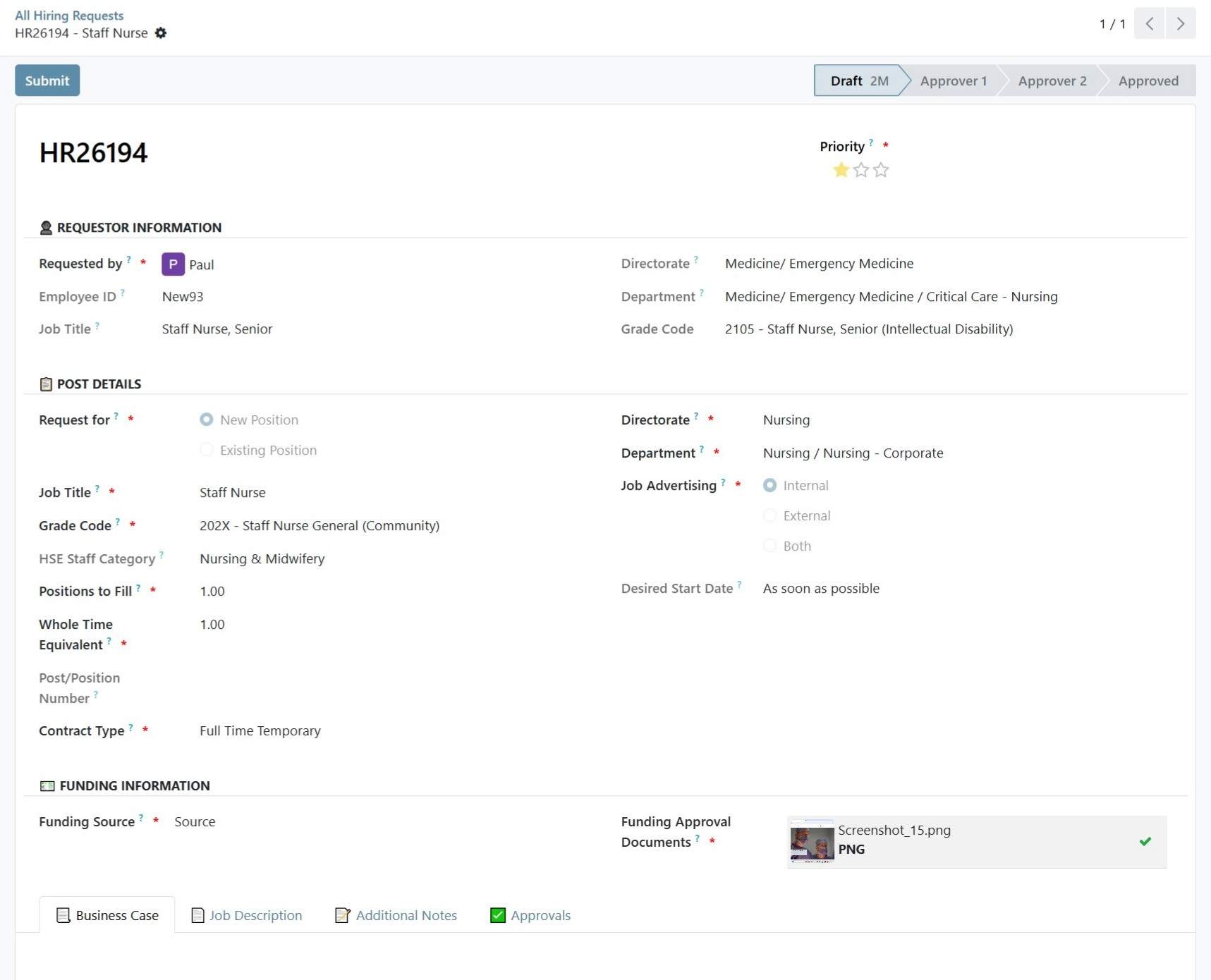
Structured requisition submission
Hiring managers submit requests through a standardised form, ensuring all required fields are completed before submission.
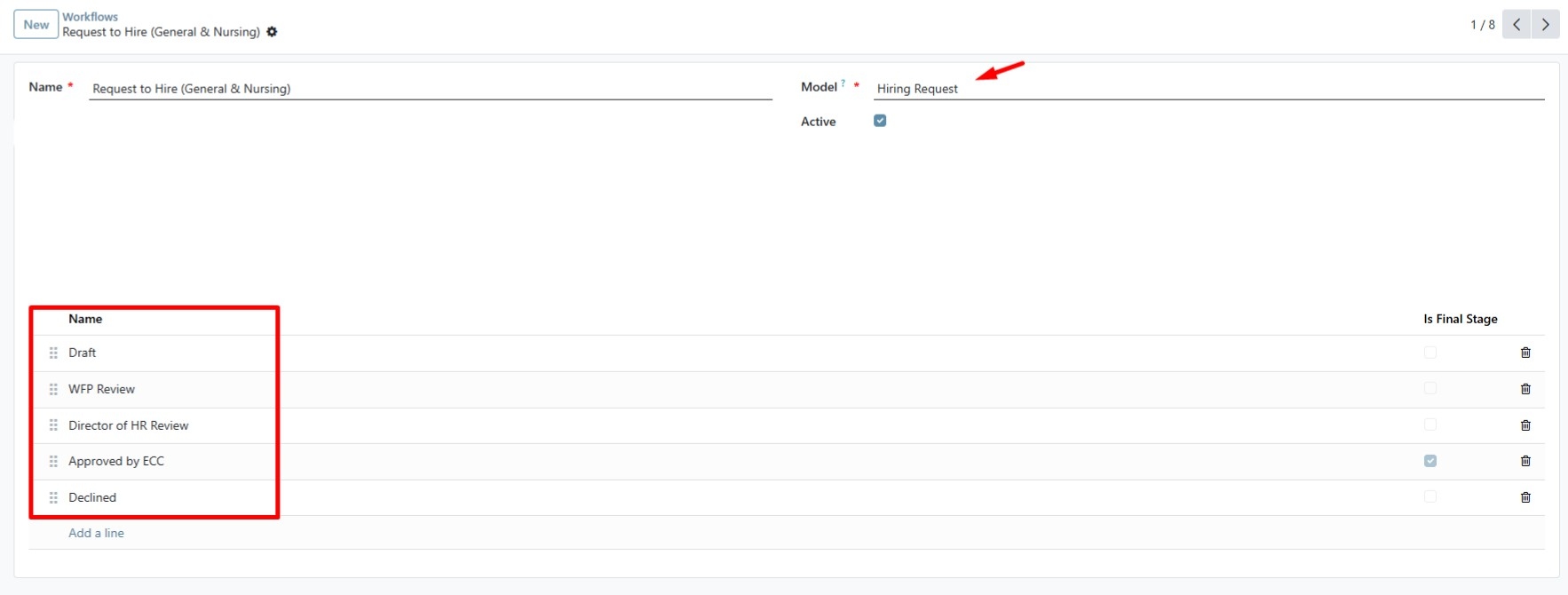
Multi-stage approval routing
Requests move through configurable approval stages such as department heads, finance, and HR, with clear ownership at each step.
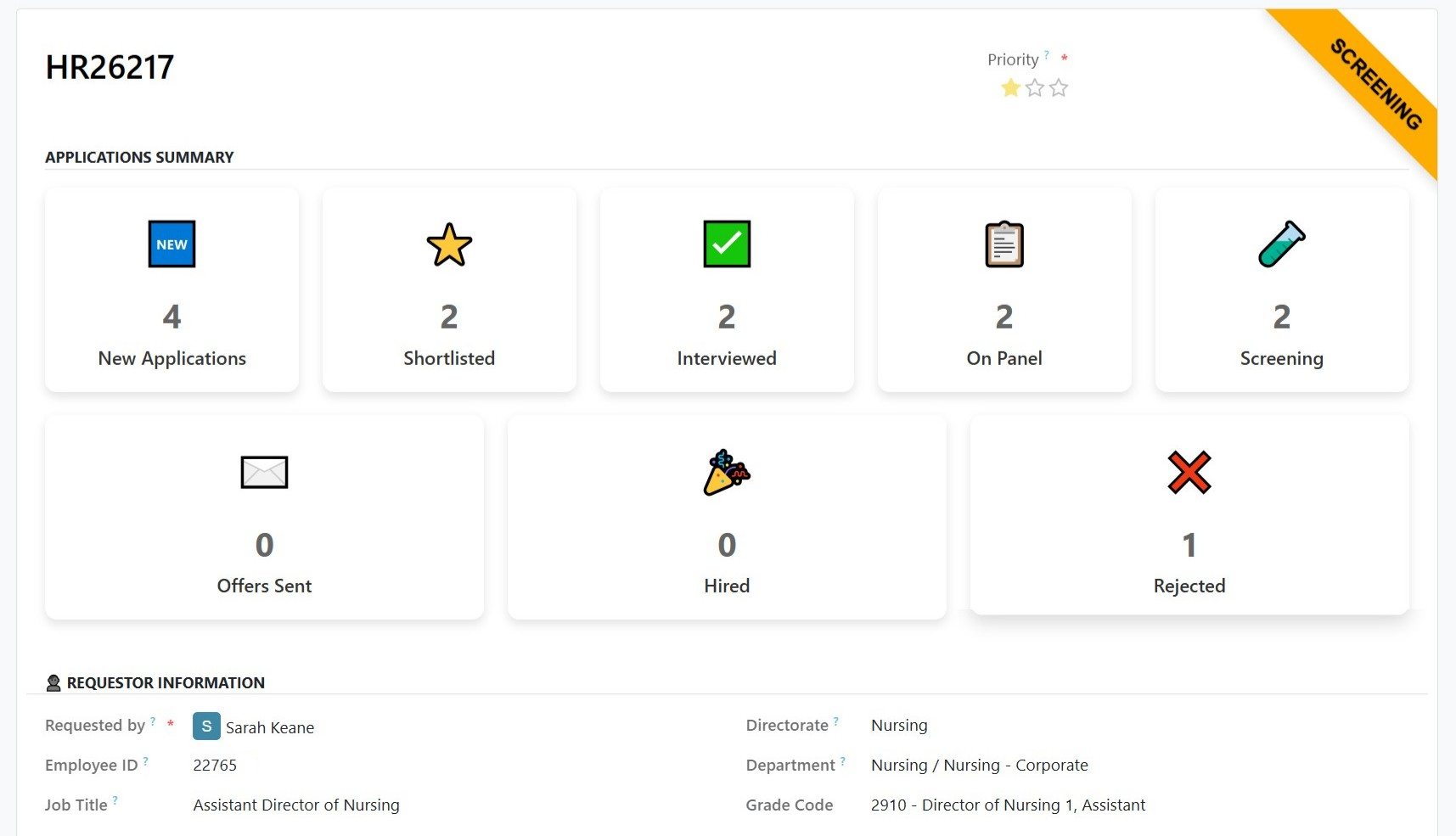
Real-time tracking and visibility
All stakeholders can view the current status of each hiring request without manual follow-ups.
Clarification and feedback loops
Approvers can return requests with comments, ensuring structured clarification instead of informal communication chains.
Audit-ready approval history
Every action, decision, and update is recorded, creating a complete audit trail of the hiring approval process.
Benefits of a Streamlined Job Requisition Workflow
Organisations that implement structured workflows experience measurable improvements:
- Faster time-to-hire due to reduced pre-approval delays
- Better budget control through formal finance validation
- Improved accountability across stakeholders
- Reduced manual coordination effort for HR teams
- Clear audit trails for compliance and reporting
Final Thoughts
A job requisition workflow is not just an administrative step in hiring. It is the foundation that determines how quickly and effectively an organisation can respond to talent needs.
When structured properly, it removes delays, reduces ambiguity, and ensures hiring decisions are both fast and accountable.
Modern HR platforms like Numla ATS help organisations replace fragmented approval processes with structured, transparent workflows that support better hiring outcomes from the very first step of the recruitment cycle.